
"The morning of September 24, 1812, was typical for this time of year on Paynes Prairie. With the sun barely up over the horizon, the air was already warm and thick with humidity. At Paynes Town, there was more activity than usual as nearly one hundred of King Payne’s warriors prepared to leave with their chief on an expedition to St. Augustine. Shortly after sunrise, the band rode out of the village, heading north along the ancient Alachua Trail. By 8:30 A.M., the Indians passed the area of present-day Rochelle as they followed the path’s northeast track. The easy pace allowed the eighty-year-old Payne to take in the quiet sounds of the forest. The magnificent groves of spreading oak trees, so easy to ride through, began giving way to stands of tall pines with a thick undergrowth of palmetto and wax myrtle. The old warrior and his great white stallion had traveled this ancient path countless times together over the years." 1
 Native Americans gazing over the vast beauty of a Florida prairie.
In the mid-18th century, a Lower Creek leader named Ahaya—better known as "Cowkeeper"—set out from Georgia in search of new territory. His journey led him to the vast plains of north central Florida, a region teeming with natural beauty and resources. It was on the southern edge of this expansive plain that Cowkeeper founded a settlement called Alachua, also known as "Lotchaway" (with various spellings) or simply "the Alachuas," establishing a Seminole legacy. The Alachua Seminoles thrived in this fertile Savanna, as they capitalized on the cattle left behind by the Spanish and utilized the region’s diverse terrain. This landscape, rich with rivers, lakes, swamps, and sprawling savannas, offered both sustenance and security, ensuring their survival and prosperity.
When Cowkeeper passed away in 1784, leadership of the Seminoles fell to King Payne. Under his guidance, the Seminoles moved their village closer to the savanna, establishing what became known as Payne’s Town. There, King Payne built a European-style plantation home that reflected the growing wealth of his people. With vast herds of cattle, horses, sheep, and slaves, King Payne symbolized the height of Seminole prosperity in Alachua.
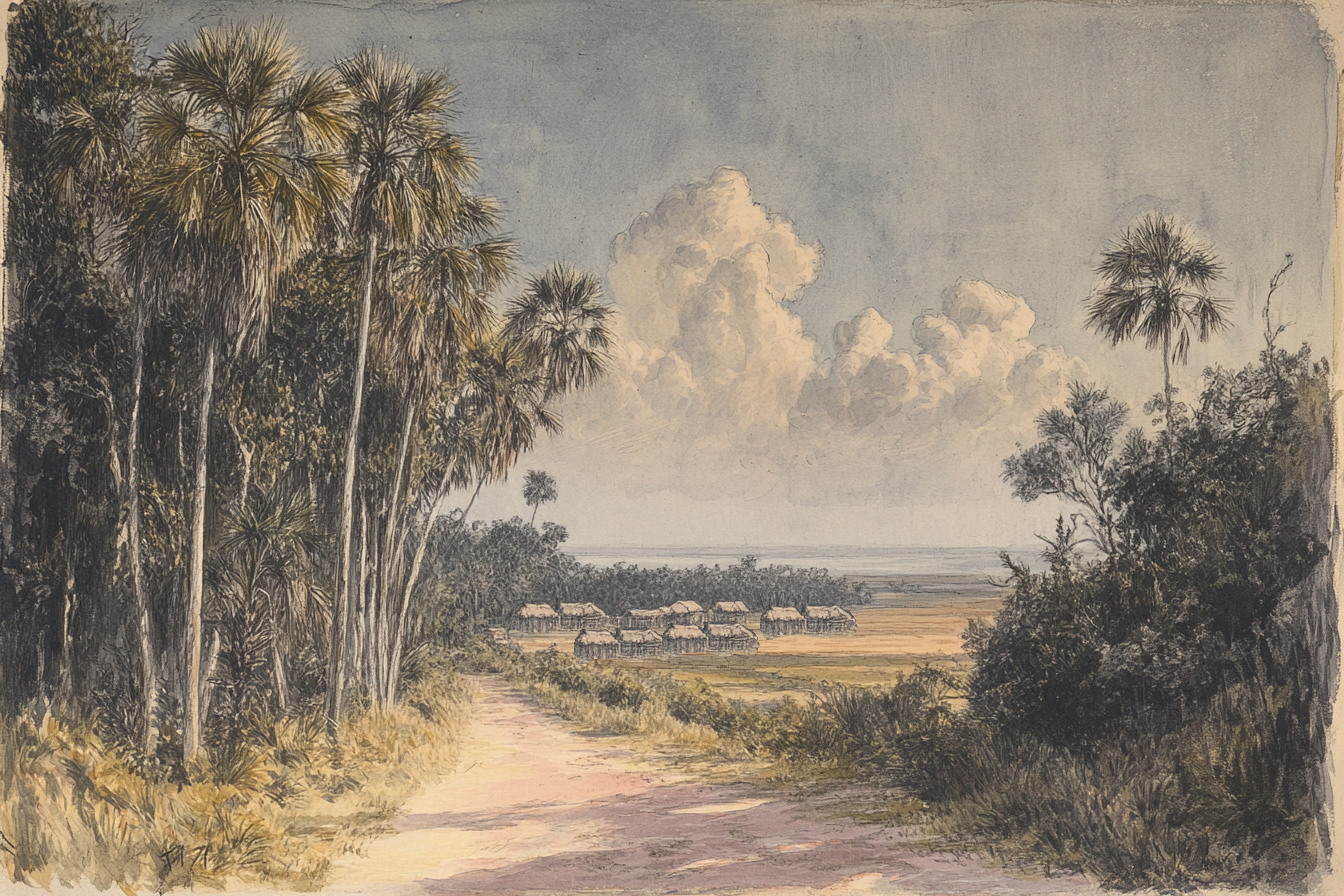 A Seminole settlement near the Alachua Savanna.
In addition to establishing their own settlements, the Seminoles formed strong alliances with runaway slaves who sought refuge in Spanish-controlled Florida. These freedom seekers built maroon communities, intermarried with the Seminoles, and became known as "Black Seminoles," forging deep cultural and military ties that would shape their shared resistance against outside forces.
Around the time King Payne became the new Seminole leader, Florida was returned to Spanish control after two decades of British rule. Recognizing the importance of trade and the need to protect his people from large-scale attacks, King Payne sought to maintain peace and neutrality amongst shifting alliances. Tensions were escalating - not only between the United States and Spain - but also among various tribal groups in the region.
Despite Payne's efforts, conflict soon became inevitable. As the United States expressed growing interest in acquiring Spanish Florida and dividing its lands, the Seminoles became increasingly resistant to American expansion. Many Seminoles abandoned their neutral stance and launched raids along the Georgia border and on white owned plantations along the St. Johns River. These actions ultimately drew King Payne and the Seminoles into direct conflict with the Americans and Patriots.
During the 1812 war with Great Britain, the United States devised plans to seize Florida from Spain's weakening grip. Consequently, President James Madison authorized a covert mission into East Florida. This campaign, later known as the Patriot War (1812-1814), enlisted volunteers from Georgia as well as local sympathizers—referred to as the "Patriots"—to incite an uprising against Spanish rule. In addition to their objective of annexing East Florida for the United States, the Patriots sought to eliminate the region as a haven for escaped slaves and a launching point for Native American raids into American territory.
By July 1812, the Patriots briefly seized Fernandina and other areas. They drafted a constitution and established a government for the newly proclaimed Republic of East Florida. However, scrutiny over why the United States was in Spanish-controlled East Florida forced President Madison to quietly withdraw government support for the operation. Colonel Thomas Adam Smith, the commander of American troops in Florida, supported the Patriot cause but was uncertain how to advance it without a clear directive from the government.
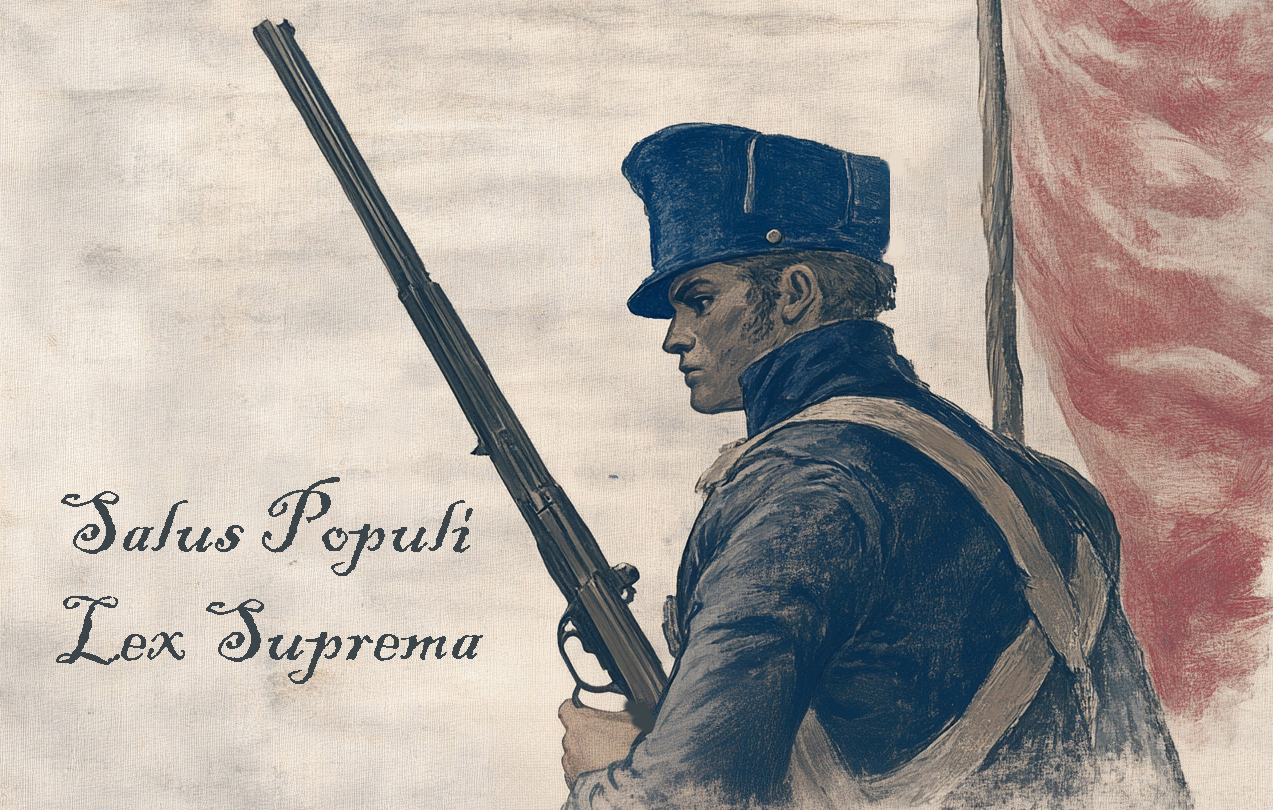 The Patriot manifesto, “Salus populi lex suprema,”
or “The safety of the people, the supreme law.” P. Marlin 2025
The Patriot manifesto, “Salus populi lex suprema,”
or “The safety of the people, the supreme law.” P. Marlin 2025
In the meantime, the Seminoles, aligning with the Spanish to expel the Americans, launched relentless raids along the St. Johns River. Led by King Payne's brother, Bowlegs, and joined by black allied forces, they boldly attacked and destroyed the storehouses at American fortifications. They continued their assaults on the Americans and Patriots by burning white owned plantations as well as ambushing military personnel, leaving their scalped and mutilated bodies on the paths where they had been struck down.
In a letter to General Cushing on August 21, 1812, Colonel Smith stated that "The Indians continue to commit depredations in my rear, almost every day, they have burnt & destroyed the improvements on a number of plantations & carried off a great number of slaves. The inhabitants are all removing to the Islands, many of them having been reduced in a few hours from affluence to almost beggary."
 Colonel Smith letter to General Cushing dated August 21, 1812.
Thomas Adams Smith Papers, Volume 1, Letter book, March-September 1812
The State Historical Society of Missouri
Colonel Smith letter to General Cushing dated August 21, 1812.
Thomas Adams Smith Papers, Volume 1, Letter book, March-September 1812
The State Historical Society of Missouri
In the midst of the chaos, Daniel Newnan, backing the Patriot cause, arrived in Florida with a large group of Georgia volunteers. Born in North Carolina, Daniel Newnan attended the University of North Carolina before moving to Georgia, where he established himself as a planter by acquiring land and enslaved laborers. In addition to his work as a planter, he was actively involved in the militia and was appointed adjutant general of Georgia, a position he held from 1806 to 1817.
Upon their arrival, Daniel Newnan and his volunteers were placed under Colonel Smith's command. Colonel Smith, wearied by his ongoing battles against the Seminoles and the Spanish, expressed frustration over the lack of reinforcements and the short enlistment terms of the militia, which hindered their effectiveness. In addition, the increasing number of Patriot retreats in response to relentless Seminole attacks had made his position untenable. To address the Seminole issue, Smith requested assistance from Newnan and the Georgia volunteers.
The directive came on August 21, 1812, in a letter addressed "To the officer commanding the Georgia Volunteers - Sir, you will with the detachment under your command take post at Picollata, on your arrival there you will dispatch a strong party to secure the boat used by the hostile Indians & negroes to cross the St. Johns near Buena Vista. This effected you will proceed without (?) of time to march against the Indian Towns within this providence. The Contractor will comply with your requisition for such transport as can be procured, you will without waiting further order commence your movement the moment you are prepared. The Towns or Settlements you may conquer are to be destroyed, together with their Corn, Potatoes. You have enclosed an order on (?) Stallings for some (?)."
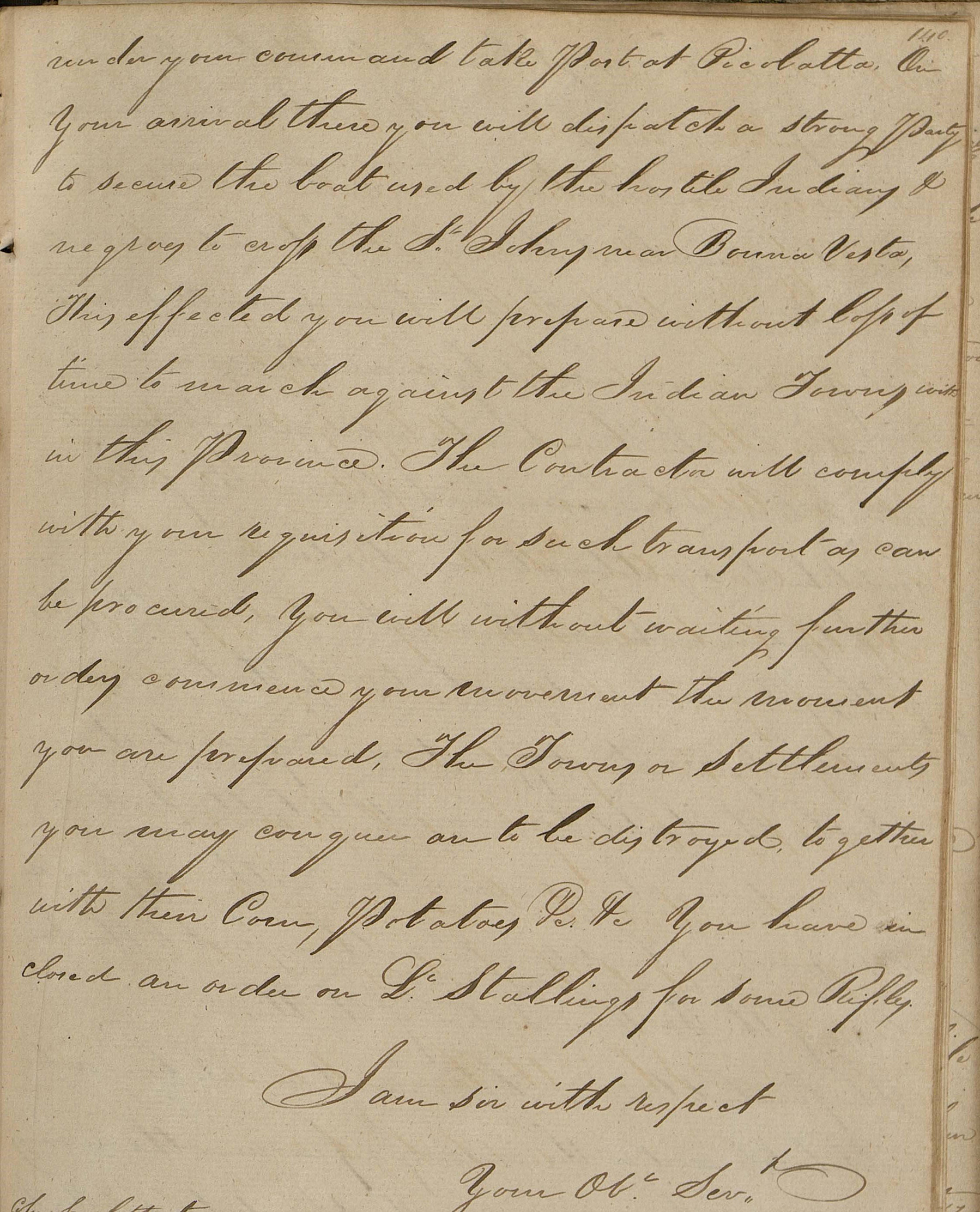 To the
officer commanding the Georgia Volunteers from Colonel Smith. Thomas Adams Smith Papers, Volume 1, Letter book, March-September 1812
The State Historical Society of Missouri
To the
officer commanding the Georgia Volunteers from Colonel Smith. Thomas Adams Smith Papers, Volume 1, Letter book, March-September 1812
The State Historical Society of Missouri
Within a week of receiving marching orders from Colonel Smith, however, Newnan and his men were abruptly redirected to assist Smith’s troops, who had been immobilized by the Seminoles. This unexpected change significantly delayed the expedition to Lotchaway. By the time they were finally set to march to Payne's Town, Newnan's Georgia volunteers were battle-worn, exhausted by Florida’s relentless humidity, and weakened by the fierce resistance of the Seminole warriors.
To rally his men, Newnan emphasized the growing threat to the Georgia frontier, highlighting the alliance between the Seminoles and the slaves. He promised them Spanish land taken from the natives and showed surveying instruments to prove his intentions. Despite their exhaustion, the prospect of land ownership and a sense of duty to protect Georgia kept many of his men in the fight.
With just four days' worth of provisions, Newnan and his men left Picolata, located along the St. Johns River, and set out for Payne's Town. Marching in single file, they arranged their encampments in a triangular formation, sleeping with their clothes on, feet pointing outward, and weapons in hand, ready for an attack at any moment. Within four days, the advance party reached the southwest edge of Newnan's Lake along the Alachua Trail. Suddenly, Newnan's scouts spotted a large band of Seminoles approaching along the same path. The surprise encounter sparked immediate action on both sides as swift commands were issued and men quickly sprang into motion.
The first engagement lasted over two hours, with the Seminoles retreating into the swamp to await reinforcements - their war cries and imitations of wild animals created an eerie, chaotic atmosphere that echoed through the swamp. Despite being outnumbered, Newnan’s forces quickly constructed a makeshift breastwork for defense. After suffering initial casualties, the remaining men resorted to scalping the fallen Seminoles, a grim testament to the brutality of the conflict.
 Heading for battle.
Perhaps the most detailed account of the engagement with the Seminoles comes from Newnan himself, which was written after the conflict on November 19, 1812. In his report, titled "Newnan’s Expedition," he provides a firsthand narrative of the events. An excerpt from the document is as follows:
"On the evening of 24th of September, we left the St. John’s marching in Indian file, capt. Humphrey’s company of riflemen in front, capt Fort’s company, under the command of lieut. Fannin, in the centre, and capt Coleman’s company, with Cone’s detachment, under the command of lieut. Broadnax, in the rear. A small party marched in front of the main body, and another in the rear, the openness of the country (except in particular places) rendered it unnecessary to employ men upon the right and left.
Our encampment of nights (there being three companies) was in the form of a triangle, with the baggage in the centre, the men with their clothes on, lying with their feet pointing outward, and their firelocks in their arms. In case of an attack, the officers were instructed to bring up their companies upon the right and left of the company fronting the enemy, and attend to the Indian moe of fighting until ordered to charge. In case of meeting the enemy upon our march, Humphrey’s company was instructed to file off to the right, Fort’s company to advance and form to the front in single rank, and Coleman’s company to file off to the left; the whole then to advance in the form of a crescent, and endeavor to encircle the enemy.
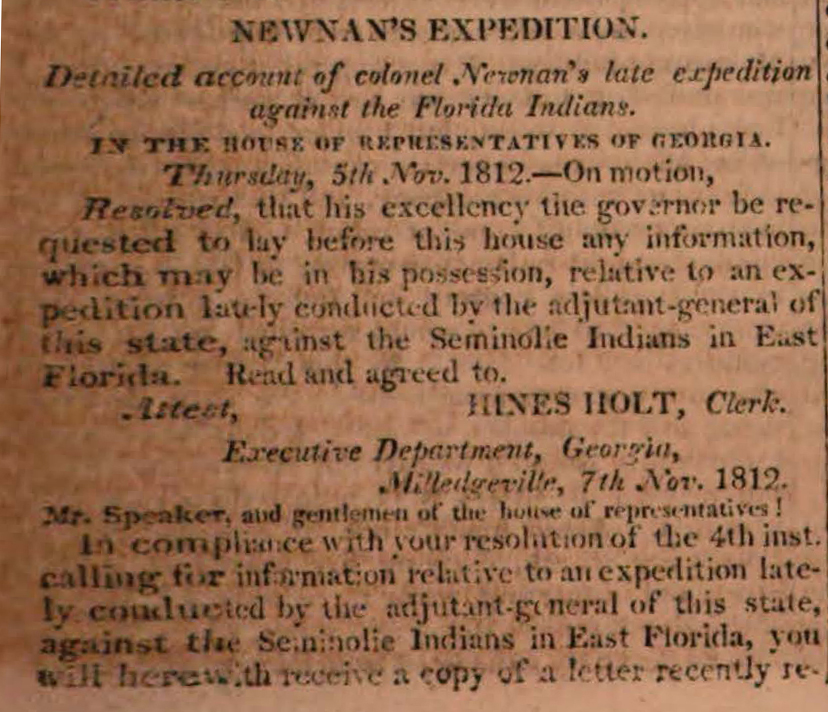 Niles Weekly Register. December 15, 1812
On the morning of the fourth day of our march, when within six or seven miles of the Lotchaway towns, our advance party discovered of a body of Indians marching along the path meeting us, and at the same moment they appeared to have discovered us. As soon as I was informed of it, I lost no time in giving the necessary directions for the companies to advance, and obey the instruction which had been previously given to them, and which appeared exactly suited to the situation in which we found the enemy.
As soon as Fort’s company (at the head of which I had placed myself) had advanced to its proper ground I discovered the Indians falling back, and making every preparation for battle, by unslinging their packs, trimming their rifles, and each man taking his place. We continued to advance, taking advantage of the trees in our progress, until we were within 130 yards of the Indians, when many of them fired, and I instantly ordered the charge, which drove them from behind the trees, and caused them to retire with the greatest precipitation; our men all the while firing at them, slew several, and by repeated charges, drove them half a mile, when they took shelter in the swamp.
 This 1880 Alachua County map designates the approximate location of the engagement, including Paynes Town.
Library of Congress.
This 1880 Alachua County map designates the approximate location of the engagement, including Paynes Town.
Library of Congress.
We had one man killed and nine wounded, two of which have since died of their wounds. The loss of the enemy must have been considerable. I saw seven fall to the ground with my own eyes, among whom was their king, Payne, two of them fell near the swamp, the rest of our men had the curiosity to scalp. The rifle company on the right and Broadnax’s on the left, speaking of killing several near the swamp, who were borne off by their comrades, it being a principle among the savages to carry off their dead at the risk of their lives.
We remained on the battle ground watching the movements of the Indians who were near the swamp painting themselves, and appeared to be in consultation, all of which indicated an intention to renew the combat. Accordingly a half an hour before sunset, having obtained a considerable reinforcement of negroes and Indians, from their towns, they commenced the most horrid yells imaginable, imitating the cries and noise of almost every animal of the forest, their chiefs advancing in front in a stopping serpentine manner, and making the most wild and frantic gestures, until they approached within two hundred yards of us, when they approached within two hundred yards of us, when they halted and commenced firing.
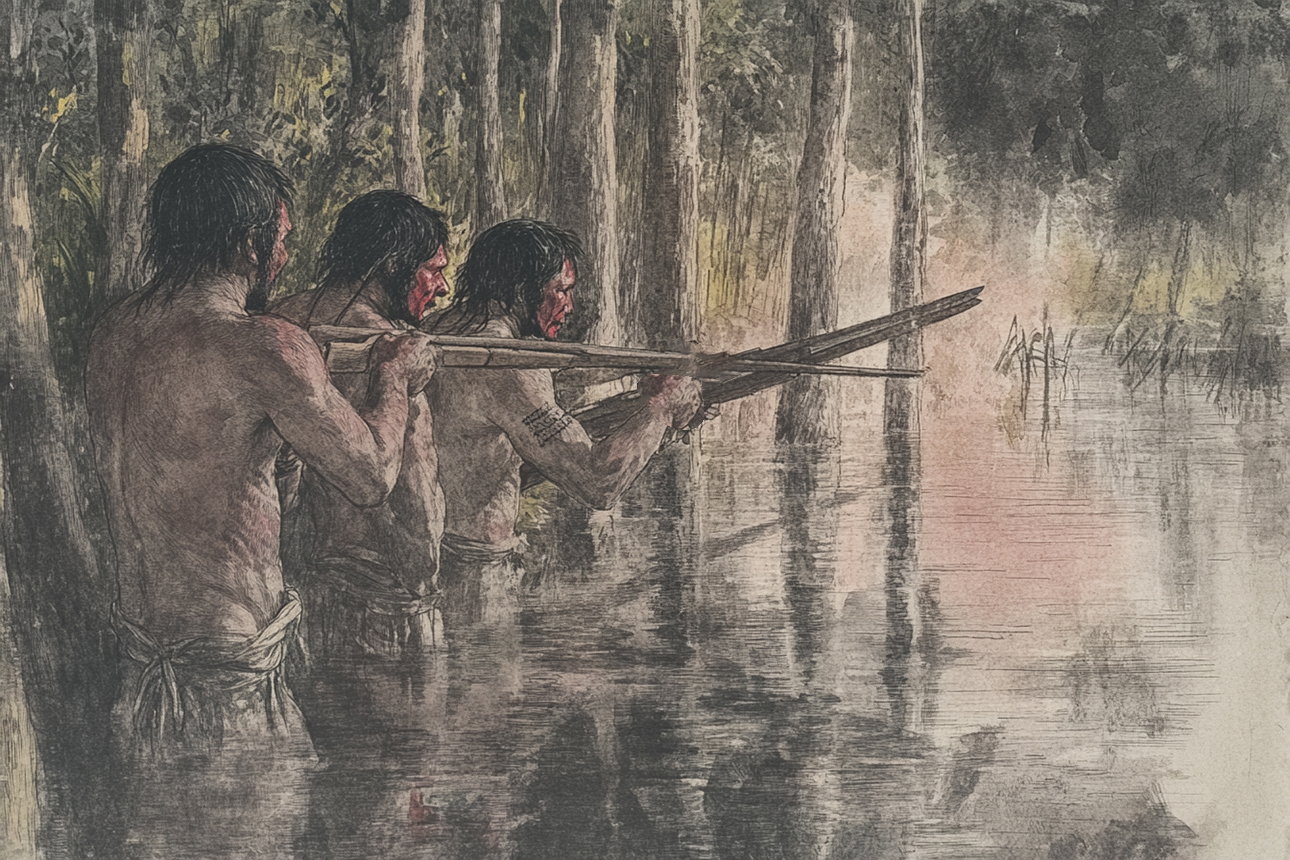 Seminoles prepare for battle in the swamp.
Our men were not to be alarmed by their noise and yells, but as instructed remained perfectly still and steady behind logs and trees until the enemy by this forbearance had approached somewhat nearer when a brisk and well directed fire from our line soon drove them back to their original ground. I would now have ordered the charge, but being under the necessity, from the extension of the enemy’s line, of detaching nearly one-half of my force to protect our camp and wounded (the assailing of which is a great object with Indians) I was left to contend with a force three times as numerous as my own.
The action lasted until eight o’clock, when the enemy were completely repulsed in every attempt whether made upon our centre or flanks. We had two men killed and one wounded: the enemy carried off several of their men before it was dark – after which all firing (of course random) as at the spot whence the flash arose. After fighting and fasting the whole day, we had to work throughout the night, and at day light had a tolerable breastwork of logs and earth, with port holes on the ground on which the battle was fought. We were reduced to this necessity, for in dispatching capt. Whitaker about dark to St. John’s for a reinforcement, six more men took the liberty to accompany him, taking with them our best horses: our pilot and surgeon (who was sick) was among the number.
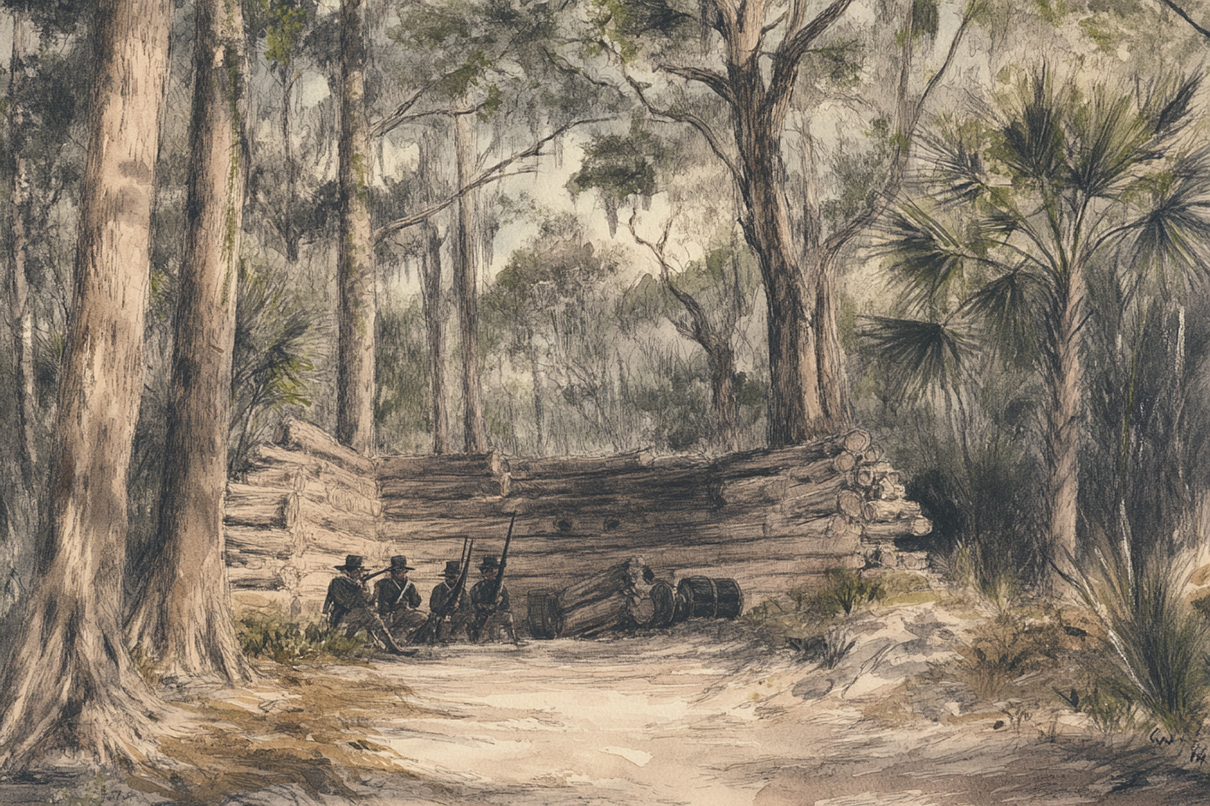 A rendering of Colonel Newnan's breastwork.
The two days succeeding the battle, we neither saw nor heard anything of the enemy, but on the evening of the third day they commenced firing at our work at a long distance, and renewed it every day for five or six days, but without killing or wounding any of our men. After killing two or three of them through our portholes they seldom came within gun-shot. Seven or eight days had now elapsed since our express had left us, hunger was staring us in the face, and we were not reduced to the necessity of eating one of our horses; we had no surgeon to dress the wounded, and apprehensions were entertained that the enemy would receive reinforcement from Augustine or the Mukasukie Indians.
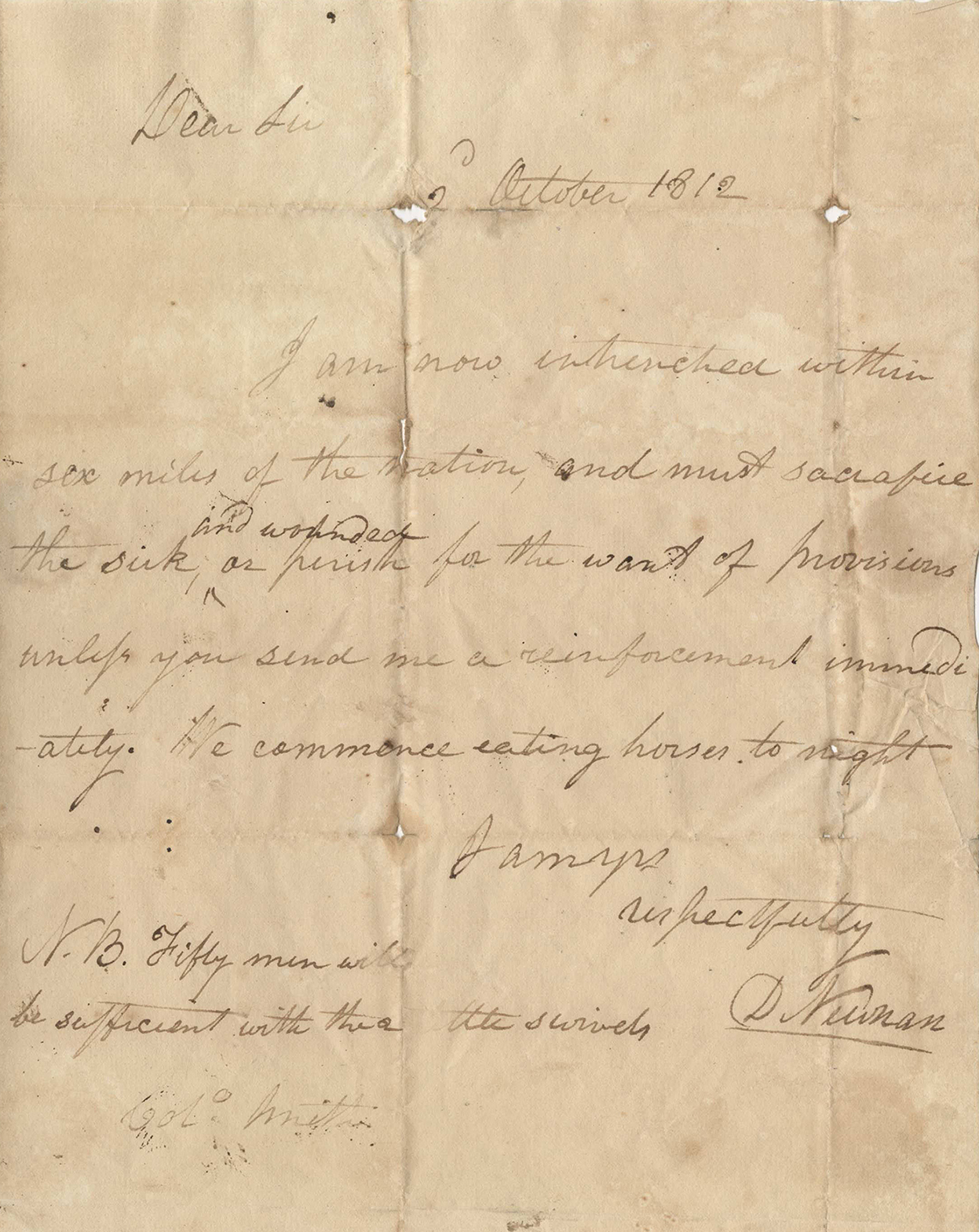 Daniel Newnan's letter to Colonel Smith requesting
reinforcements. State Historical Society of Missouri
Daniel Newnan's letter to Colonel Smith requesting
reinforcements. State Historical Society of Missouri
Expecting relief every hour, I was unwilling to leave our breast works while we had a horse left to eat, but I understood from some of my officers that a certain captain was determined to leave us with his company, and that many of the men giving up all hopes of relief, talked of deserting in the night rather than perish, or fall a sacrifice to the merciless negroes and Indians, whom they were taught to believe would surround us in great number in a few days. In this trying situation, when our few remaining horses were shot down by them, and the number of our sick daily increasing, I reluctantly assented to leave our works that night, and directed the litters to be prepared to carry the wounded."
For seven grueling days, the dwindling detachment of Georgian troops remained behind their earthwork, their provisions long depleted. Forced to survive on horseflesh, alligator, and palmetto, they endured worsening conditions with no reinforcements in sight. Recognizing the dire situation, Daniel Newnan made the difficult decision to retreat.
Weakened by illness, starvation, and relentless hurricane-like weather, the men pressed on for another 11 days, their retreat slow and arduous. Along the way, they again came under attack from the Seminoles, forcing the unit to build an additional breastwork. Finally, a relief column arrived, escorting the exhausted survivors to safety.
Though Newnan stressed the heavy losses inflicted on the Seminole warriors, his fellow commanders recognized that the unit had been fortunate to survive the ordeal. "Newnan and his men had been out 18 days, lost nine men killed, eight wounded, and eight unaccounted for. They had neither aided the Patriots nor destroyed the villages of the Alachua Indians. What they had done was to undergo intense suffering and borne it bravely." 2
As news of the encounter spread, Daniel Newnan was widely recognized for his bravery. In his honor, the first county seat of Alachua was named Newnansville, and the lake at the battle site, originally known as Lake Pithlachocco, was renamed Newnans Lake - as it is still called today.
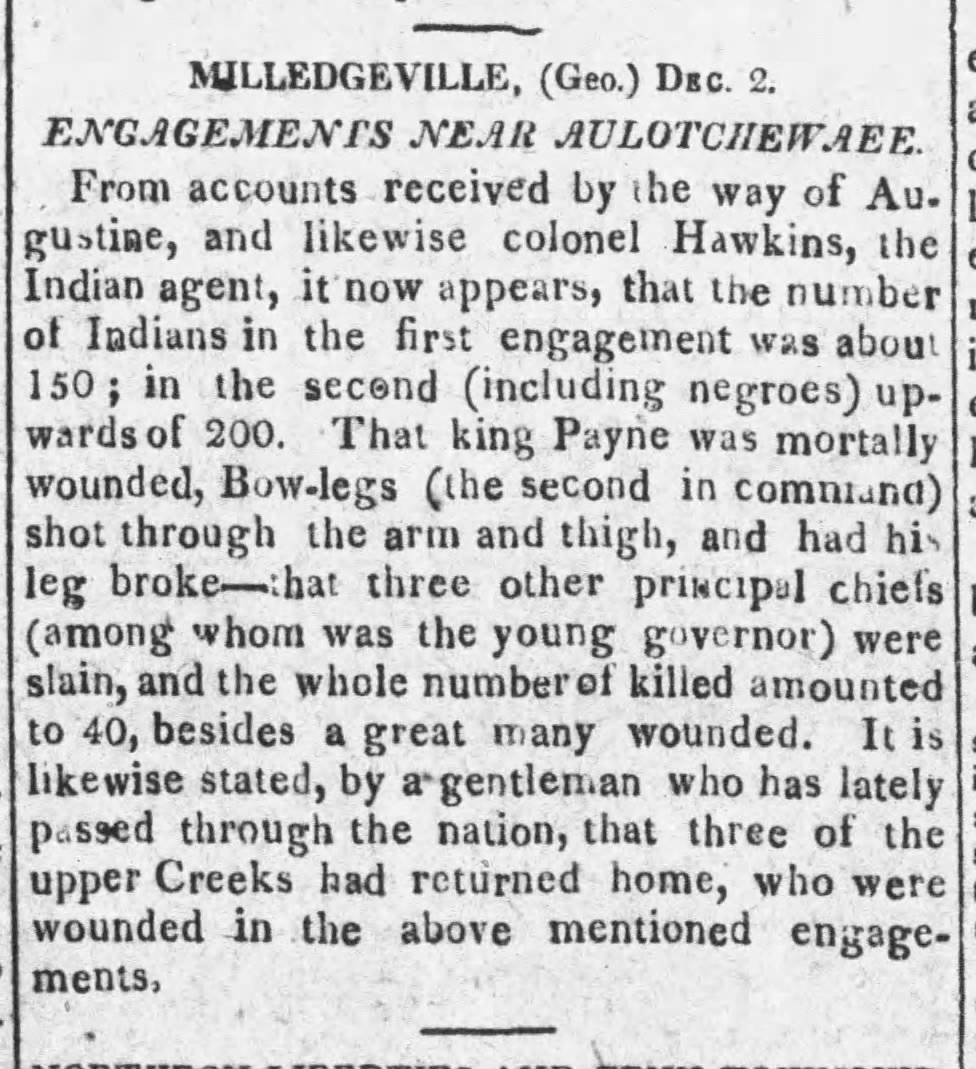
The fate of King Payne and the Alachua Seminoles was grim. Mortally wounded in the attack, Payne succumbed to his injuries. Leadership then passed to Bowlegs, who, understanding that American control of the region was inevitable, led his people west to the Suwannee, abandoning Payne’s Town for good. When Tennessee volunteers later returned to destroy the settlement, they found it deserted—its inhabitants already gone, leaving behind only the remnants of a once-thriving community.
On January 10, 1839, the Columbus Sentinel republished Payne's statement from a council of his principal warriors, originally printed in the St. Augustine Herald. "It is true, we have no assistance to expect from the Spaniards, no quarter from the enemy, who is too powerful for us to withstand; such, then, as wish to move off and abandon their all, may do so, and ought to do so quickly. BUt it shall not be said that the son of Secoffee deserted his father's grave. Tomorrow I will attack their entrenchment with such as may follow me. I may fall, but not with disgrace."
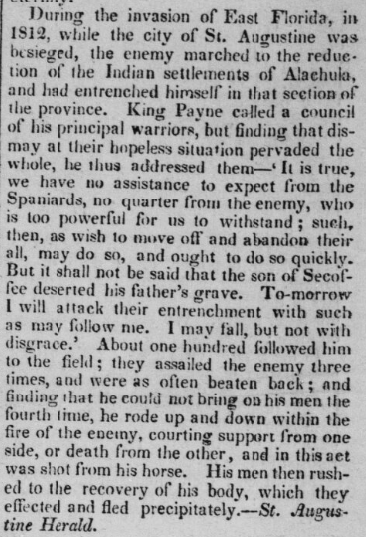 Columbus
Sentinel January 10, 1839 (reprinted from St. Augustine Herald)
Columbus
Sentinel January 10, 1839 (reprinted from St. Augustine Herald)
Though the Patriot uprising failed to seize full control of Florida, it destabilized Spanish authority and was a step towards the United States acquiring the territory in 1819 through the Adams-Onís Treaty. This confrontation between Georgia militia and the Alachua Seminoles, including chief King Payne, marked the beginning of a significant shift in North Central Florida as it paved the way for the fertile lands of "Lotchaway" (Alachua) to transition into the hands of white settlers.
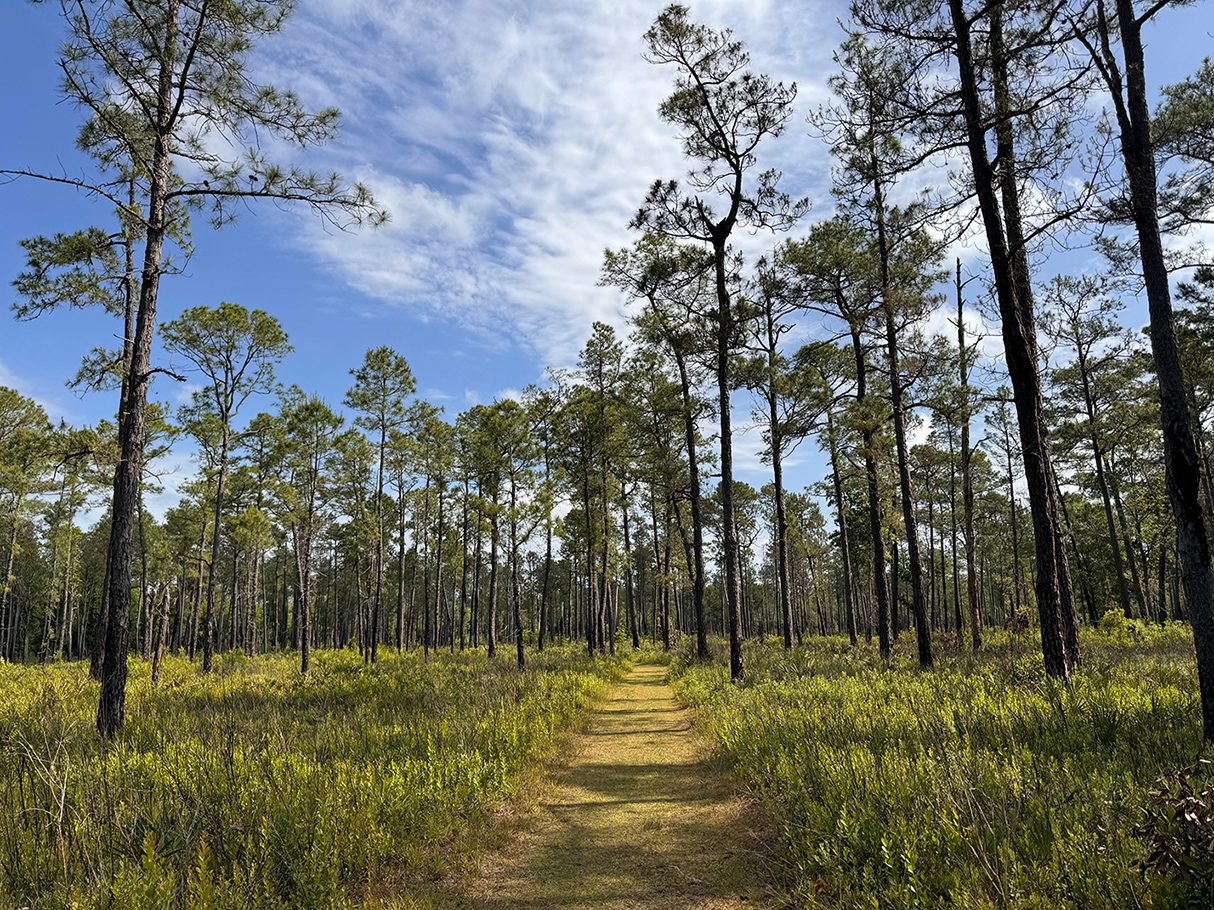 The Chacala Trail at the Paynes Prairie State Preserve is located near the original site of King Payne's Paynes Town.
The Battle of Newnans Lake may have concluded, but the memory of the event and its impact on the region would endure for generations to come. It also led to the eventual preservation of the battlefield site itself.
During the 1930s, Andrew J. Feaster, a lifelong resident of Alachua County and owner of the land where the battle once raged, unearthed a collection of relics scattered across the fields. Among the discoveries were a sword hilt and musket balls—silent remnants of the violent clash that had taken place decades earlier.
Recognizing the historical importance of the site, Feaster made a significant contribution to its preservation by donating the half-acre battlefield to the Gainesville Chapter of the Daughters of the American Revolution (DAR). In honor of Colonel Newnan and the battle’s legacy, the DAR undertook efforts to commemorate the site, commissioning a bronze tablet inscribed with a dedication.
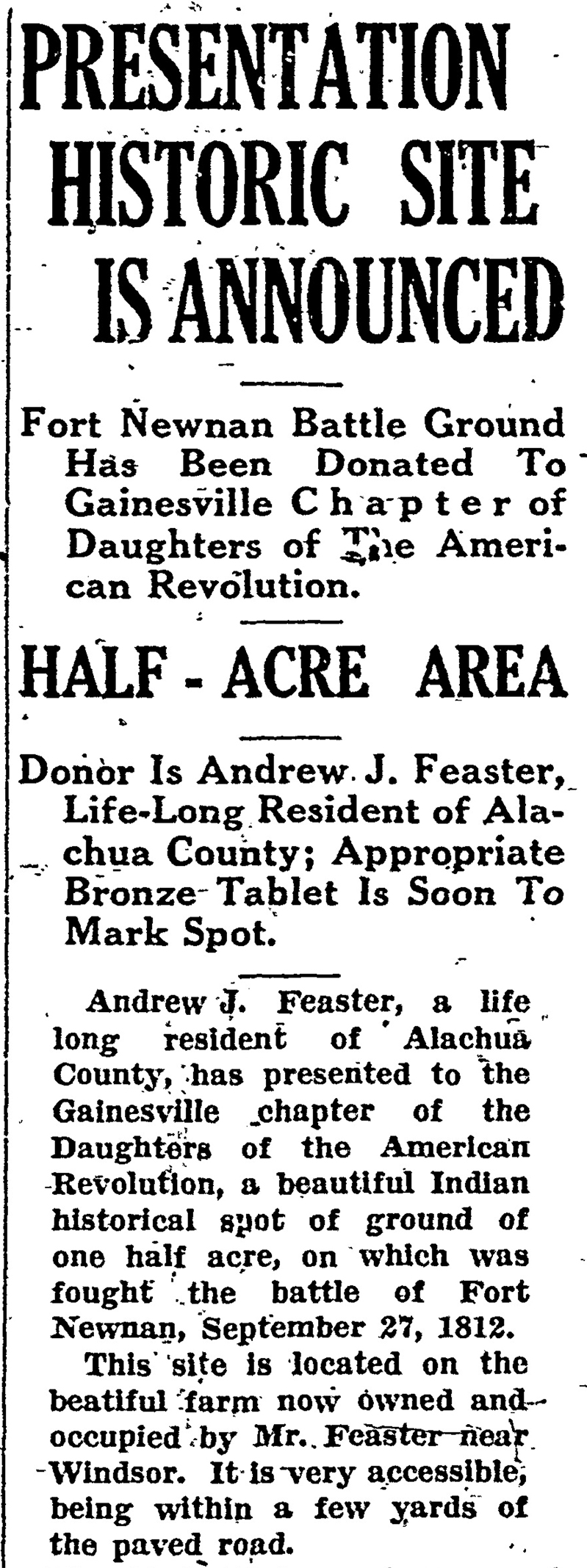 Gainesville Daily Sun October 31, 1932. P. Marlin
The official dedication ceremony took place on March 24, 1933, marking the installation of the commemorative tablet at the historic battlefield site. The occasion was filled with patriotic tributes, speeches, and musical performances, bringing together community members and historians to honor the past. The program featured a distinguished lineup of speakers and participants, including:
Florida Historic Quarterly and Treasurer, T. Frederick Davis gave the keynote address at the dedication of the memorial. In addition to relaying the historic significance of the site, he recognized the local DAR, "I congratulate this fine organization of American women, the Gainesville Chapter of the Daughters of the American Revolution, upon the accomplishment of this memorial. We salute you and those associated with you, for this worthwhile act of commemorating an important event in American History. The memorial you are dedicating here is certain to create added interest in historical matters in Florida and elsewhere -- an interest, but educational as well." The original speech is preserved in the University of Florida Archives.
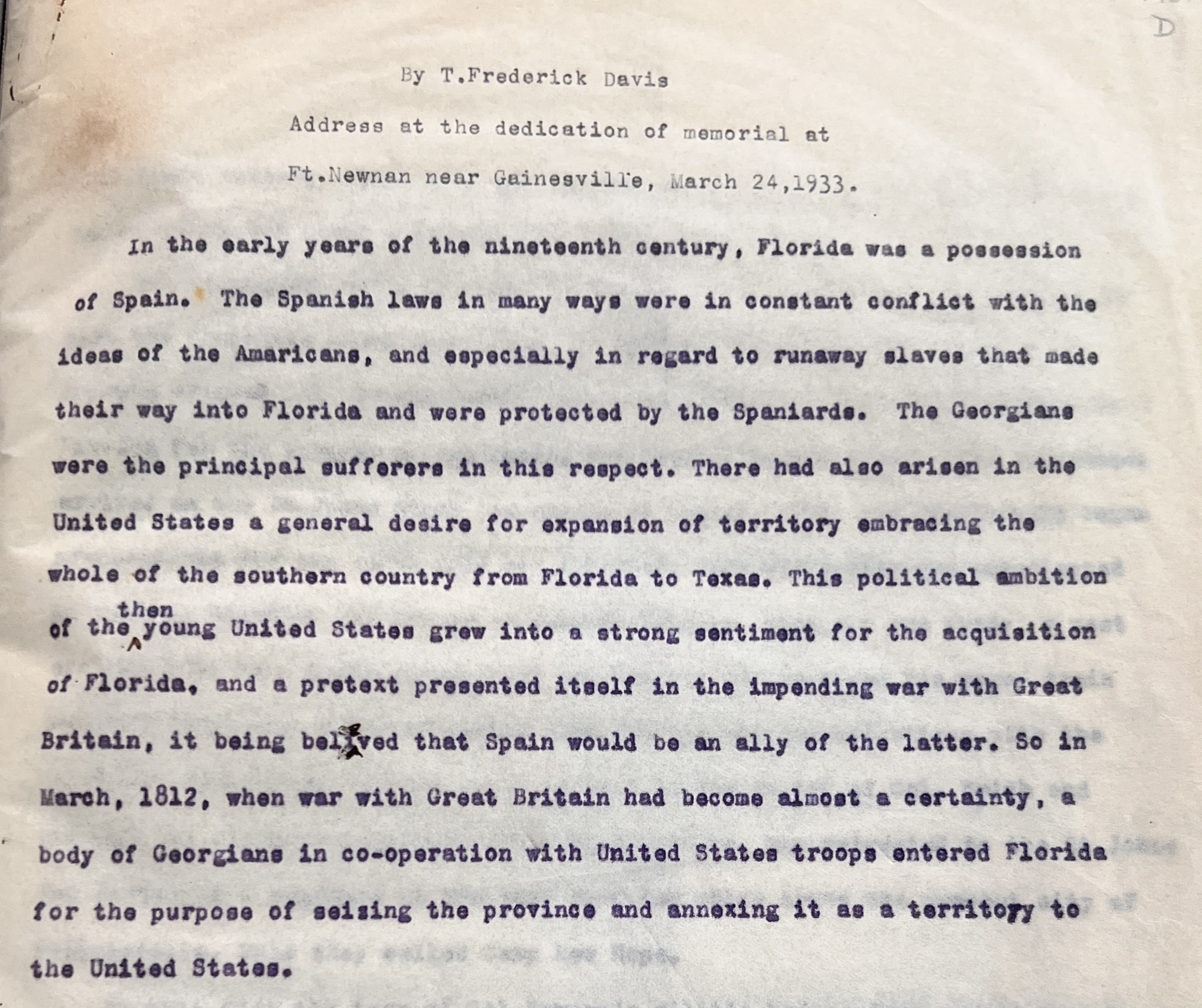 Full typewritten speech which is also signed by Davis.
University of Florida Archives
Full typewritten speech which is also signed by Davis.
University of Florida Archives
Driving down the scenic County Road 234 in East Gainesville today, it's hard to imagine that this peaceful stretch of road was once the site of a raging battle between the Seminoles and white settlers over two centuries ago. Once known as the Alachua Trail, this historic route has been traveled for centuries by Native Americans and early settlers alike.
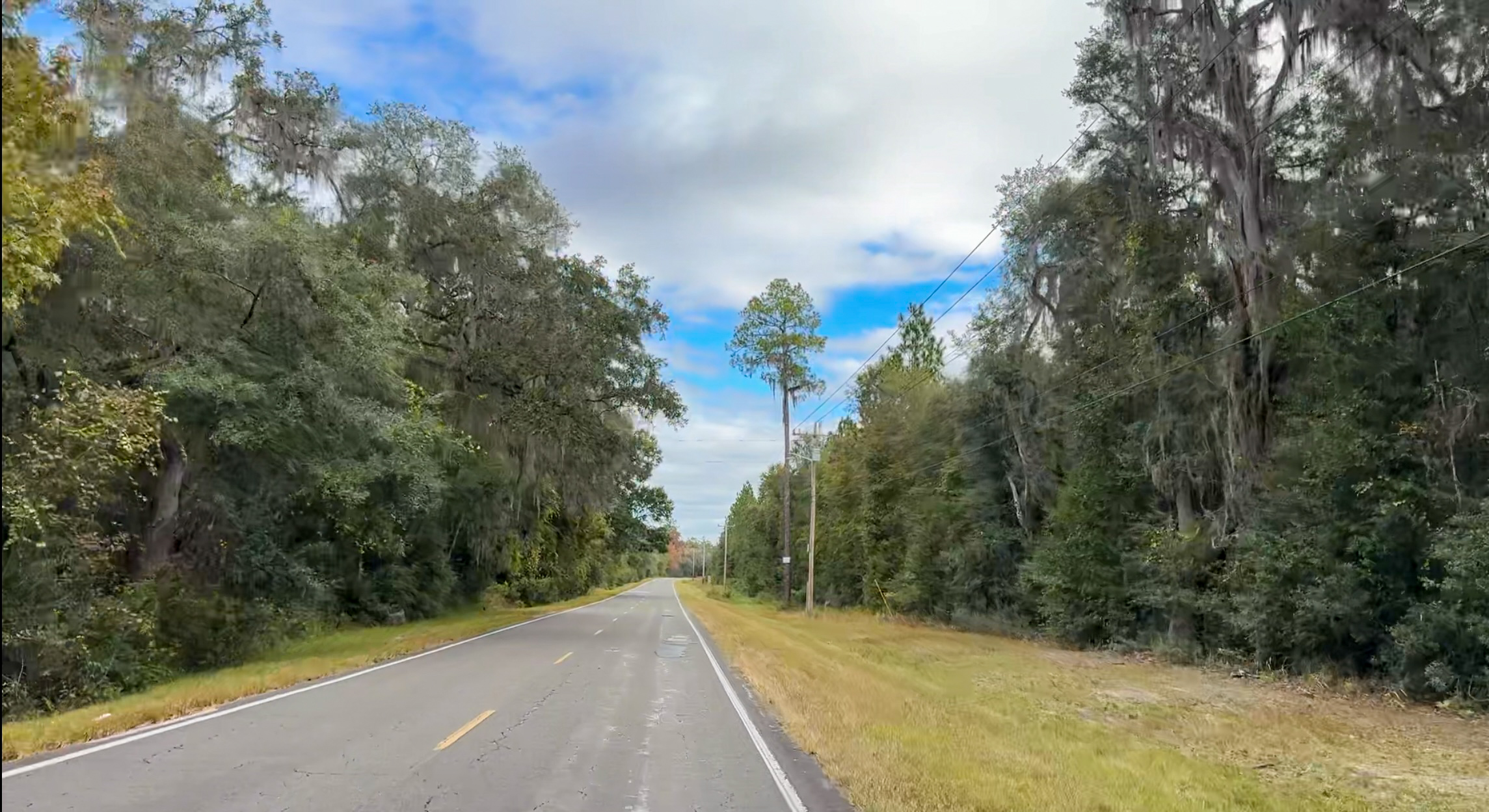 Near the expedition site on County Road 234 through Alachua. P Marlin 2025
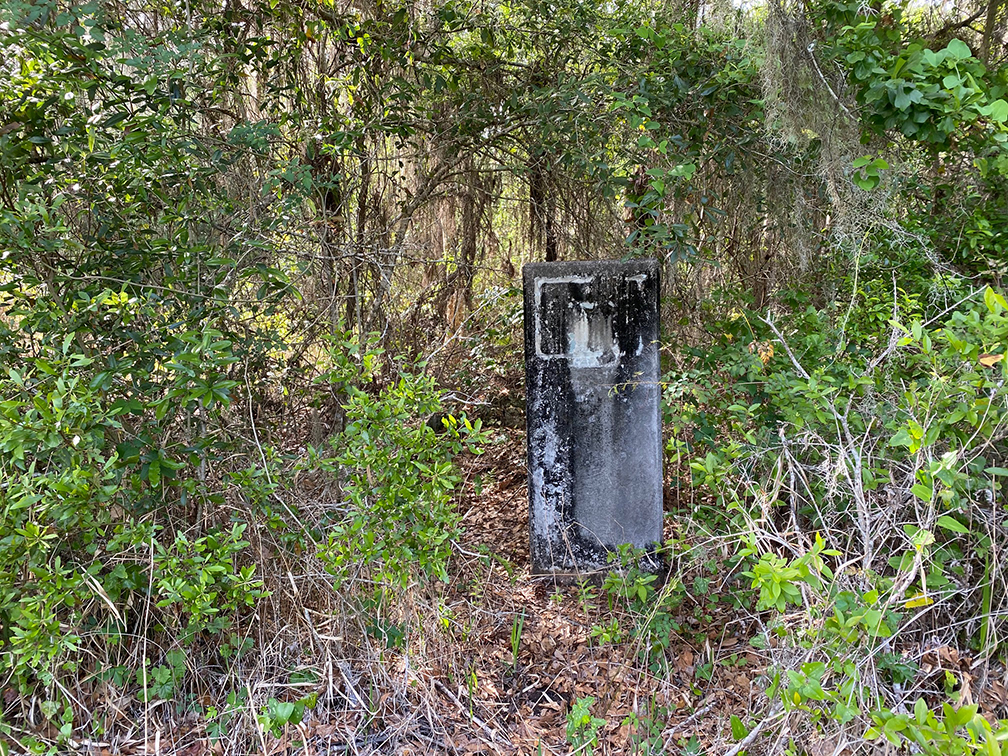 A concrete marker placed by the Daughters of the American Revolution in
1912 memorializes the site of Daniel Newnan's encounter with King
Payne and the Seminoles. P Marlin 2025
A concrete marker placed by the Daughters of the American Revolution in
1912 memorializes the site of Daniel Newnan's encounter with King
Payne and the Seminoles. P Marlin 2025
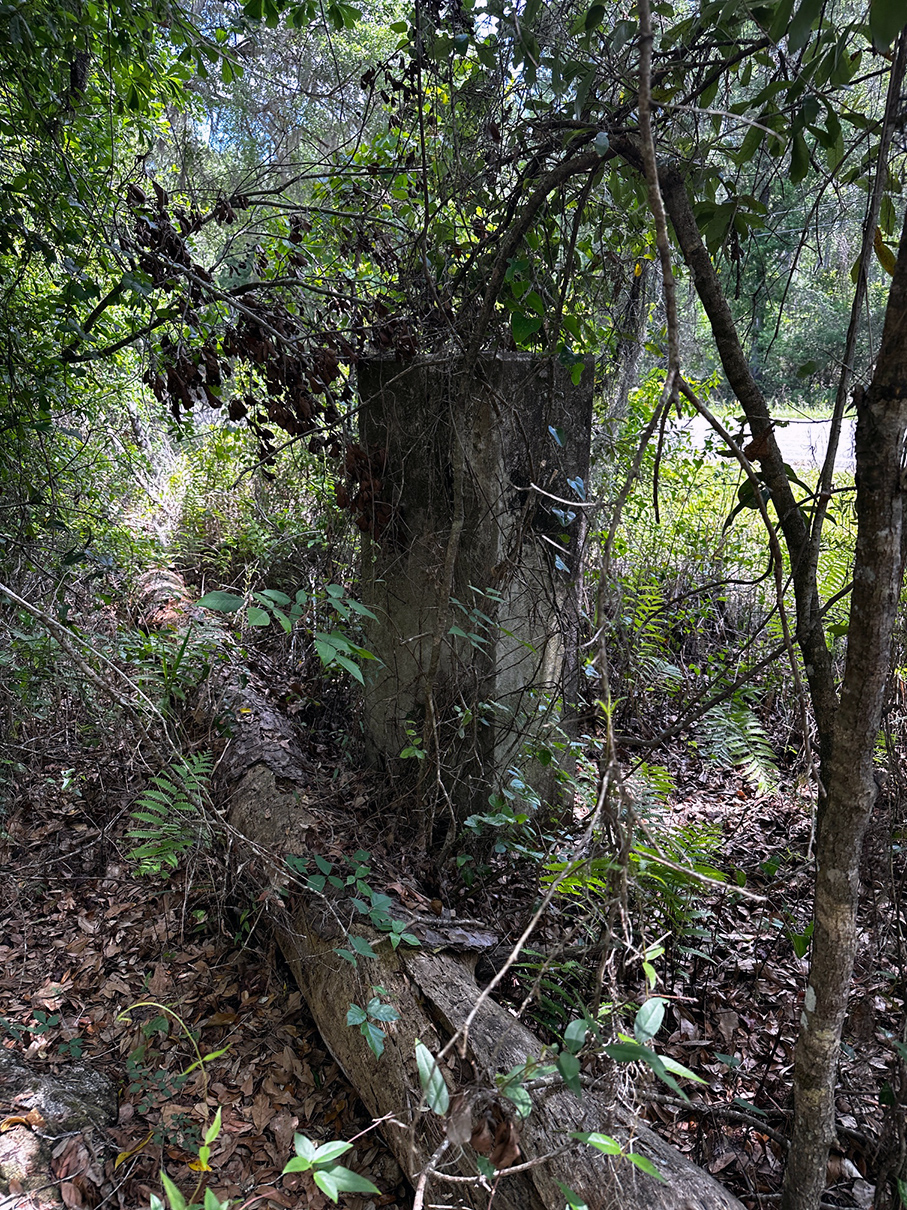 The area behind the concrete marker located on County Road 234. P Marlin 2025
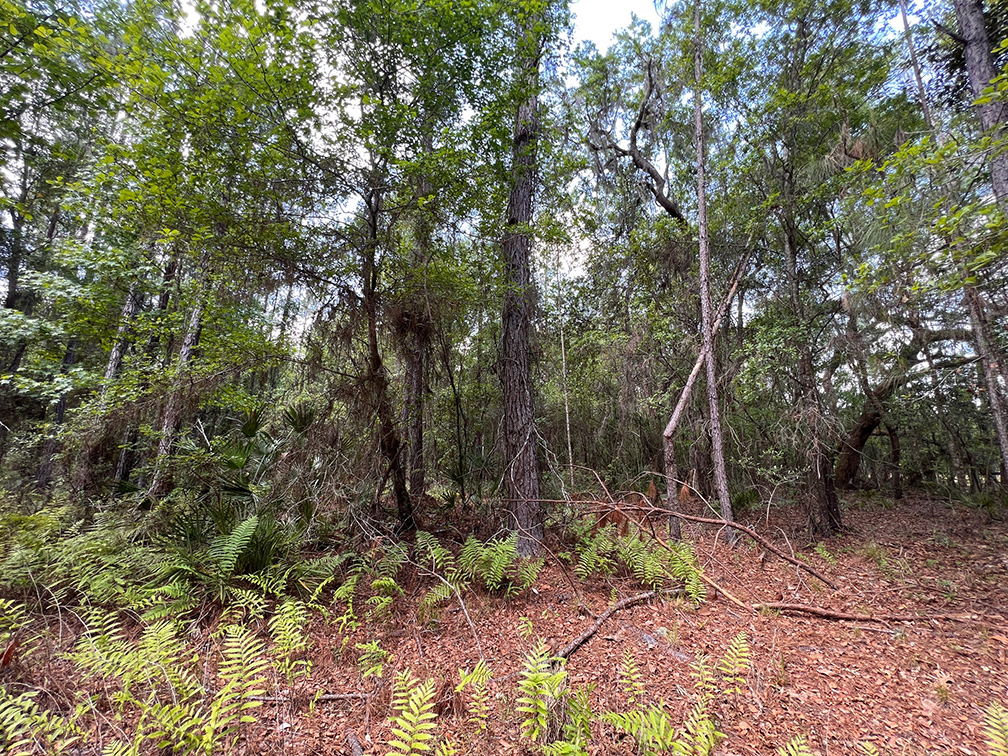 The landscape behind the concrete marker. P Marlin 2025
 The landscape behind the concrete marker. P Marlin 2025
The concrete pillar, which supported the DAR's bronze marker commemorating the battle site for nearly a century, has been concealed by overgrowth for the past decade. It is likely that this memorial also marks the graves of the men who fell in the initial engagement.
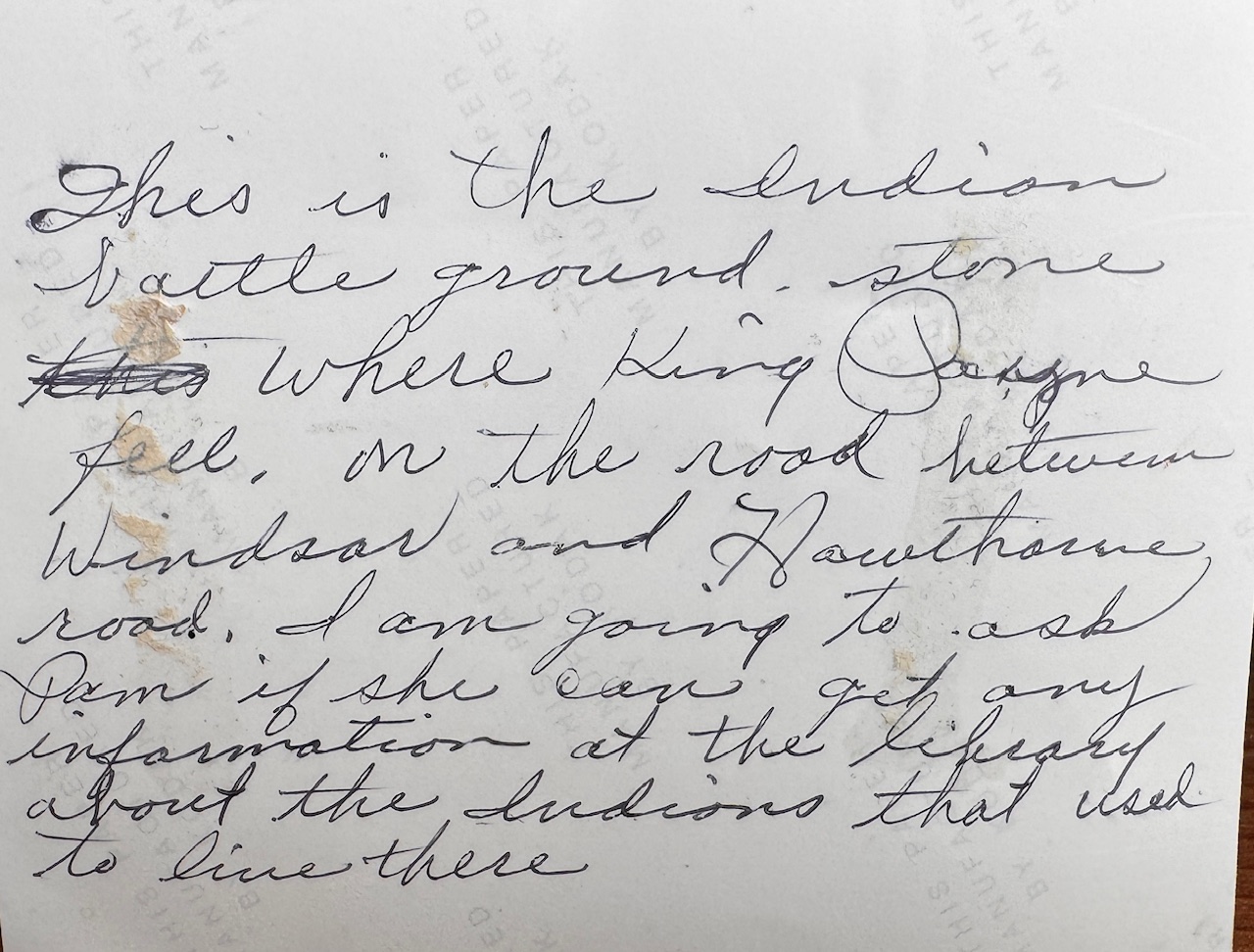
Around 1980, the memorial was still visible from the road, and my great-grandmother, Francis Johnson, took the opportunity to stop and capture a photo of it. Her image preserved the sign as it stood at the time, offering a glimpse into how the memorial once appeared before nature gradually reclaimed the area.
Years later, while going through old family photos, I rediscovered the picture. To my surprise, I noticed a handwritten note on the back that indicated my great-grandmother had intended to ask me about the event. At the time, I was in my early teens, and she must have recognized my early interest in history. It was touching to realize that she had hoped to share this story with me, perhaps even to pass on her own knowledge and curiosity. Sadly, that conversation never took place, but her note remains a cherished connection to both her and the history she sought to preserve.

1 Andersen, Lars. Paynes Prairie: The Great Savanna: A History and Guide. Sarasota, FL: Pineapple Press, 2001. ISBN 978-1561642960.
2Mahon, John K. “Daniel Newnan: A Neglected Figure in Florida History.” The Florida Historical Quarterly 74, no. 2 (1995): 148–53. http://www.jstor.org/stable/30148817.
Anderson, Robert L. “The End of an Idyll.” The Florida Historical Quarterly 42, no. 1 (1963): 35–47. http://www.jstor.org/stable/30139991.
Cusick, James G. The Other War of 1812: The Patriot War and the American Invasion of Spanish East Florida. Gainesville: University Press of Florida, 2003.